1. The problem in subjective officiating
For over a century, competitive yogasana has depended on human judges evaluating athletes with the naked eye. This model has served the sport well but carries three inherent weaknesses that the SEGA AI Judge System was invented to eliminate.
Judge fatigue and cognitive load. A typical championship day requires officials to evaluate 60 to 120 performances back-to-back. Human attention is finite; scoring precision drifts across the day. Two athletes performing identical postures at 9am and 4pm receive systematically different marks not because their performance differed but because the judges did.
Parallax and viewing-angle bias. A judge seated on the left of the stage sees a different silhouette than one seated centrally. When posture depth or spinal rotation must be measured against a strict tariff, seat position becomes score determinant — a violation of the fair-play principle every real sport rests upon.
Micro-timing and stability precision. Human judges cannot reliably detect wobbles shorter than 200 milliseconds, drift in centre of gravity below three degrees, or hold-duration deviations under a full second. Yet at elite level, the difference between gold and silver frequently sits inside those margins.
The SEGA AI Judge System, patent-pending under Malaysian application PI2026005219, resolves these three problems by replacing subjective observation with objective biometric measurement — while keeping certified Master Judges in the loop for cases the system flags as uncertain.
2. The SEGA solution — architecture of the platform
The system is built on three layers, each running independently so failure in one does not compromise scoring integrity.
Layer one — capture. Multi-camera video feeds acquire the performance from at least two spatial angles. Frame rate is fixed at 60 frames per second to allow sub-frame joint-position interpolation. Camera calibration is performed daily against a reference marker set to correct for lens distortion and stage-lighting variation.
Layer two — computer vision inference. Each frame is passed through a skeletal-tracking pipeline that identifies 33 anatomical landmarks — from cranial apex to toe joints — and renders a three-dimensional pose vector. Confidence scores accompany every landmark so the scoring layer can quantify its own uncertainty rather than pretend precision it does not possess.
Layer three — scoring engine. The pose vector is compared against the SEGA reference posture syllabus for the asana being performed. Deviation, stability envelope, and difficulty tariff combine into a single final mark that is written to the tamper-evident results archive.
3. Computer vision & skeletal landmarks
The heart of the system is pose estimation — the branch of computer vision that recovers the position of a human body from ordinary video, with no wearable sensors or markers on the athlete. The athlete simply performs; the cameras and the model do the rest.
Landmark extraction. Each video frame is reduced to a set of 33 anatomical landmarks — crown, eyes, ears, shoulders, elbows, wrists, finger joints, hips, knees, ankles, heels and toe tips. From two or more calibrated camera angles these 2D landmark sets are triangulated into a single three-dimensional skeletal pose, so depth and spinal rotation are measured rather than guessed from one flat view.
Joint angles, not pixels. Scoring never operates on raw pixels. The 3D skeleton is converted into a set of joint angles and segment vectors — the same quantities a human judge assesses by eye, but measured to a fraction of a degree and sampled 60 times a second. This is what lets the system compare an athlete against the reference syllabus objectively and repeatably.
4. The three-dimensional scoring model
Every performance is scored on three orthogonal dimensions. They are combined into one final mark, but they are also reported separately so athletes, coaches and federations can see exactly where marks were gained or lost.
5. The scoring formula
The three dimensions combine into one final mark through a transparent structure. Execution and stability produce a quality score; the difficulty tariff of the asana scales it, so a harder posture performed to the same quality scores higher than an easy one:
The exact dimension weights (we, ws) and each asana's difficulty tariff are set per division in the SEGA reference syllabus and frozen for the duration of a tournament, so every athlete in a category is scored on identical parameters. The specific calibrated values are part of the protected syllabus configuration. What matters for fairness is that the structure is fixed, published to participating federations, and identical for every competitor in a division.
6. Movement-responsive scanning
Traditional automated scoring systems begin their measurement window on a fixed countdown — an athlete must reach the final posture within a set number of seconds, and any transition after that counts against them. This model was inherited from artistic gymnastics but does not respect the rhythm-and-breath nature of yogasana, where transitions themselves carry technical value.
The SEGA AI Judge System instead uses movement-responsive scanning triggers. The scoring window begins the exact millisecond the system detects the athlete initiating the transition — not on an arbitrary clock. This produces a fairer measurement of the actual posture and its hold, decoupled from stage-management delays or nervous starts. The trigger method is one of the elements protected under the pending patent.
7. AI confidence & uncertainty quantification
A system that pretends to perfect certainty cannot be trusted; one that measures its own uncertainty can. Every landmark the model extracts carries a confidence value, and those values aggregate into an overall confidence for each scored posture.
When aggregate confidence stays above the scoring threshold, the mark is accepted automatically. When it falls below — because of poor lighting, an unusual body position, or a partially hidden limb — the system does not quietly guess. It records the low-confidence flag and routes the case to a certified Master Judge (see §12). This is a deliberate design choice: the AI is allowed to say "I am not sure," which is precisely what a fair officiating system must be able to do.
8. Camera requirements & calibration
Objective 3D measurement depends on the capture rig being correct before any athlete performs. The platform's baseline requirements are:
- At least two camera angles, positioned to see the athlete's full body through every posture, so depth and rotation can be triangulated rather than inferred from one view.
- 60 frames per second, fixed, to resolve micro-tremors and short holds that a lower frame rate would miss.
- Daily calibration against a reference marker set to correct lens distortion and adapt to the venue's stage lighting.
- Controlled, even lighting on the performance area — harsh shadow or backlight lowers landmark confidence and pushes more cases to human review.
A venue that cannot meet these requirements can still run, but more performances will fall below the confidence threshold and be escalated to Master Judges — the system degrades safely rather than scoring on bad data.
9. Occlusion handling
In advanced asanas a limb frequently disappears behind the torso or another limb — an occlusion. A single-camera system loses that joint entirely; SEGA's multi-angle capture is the first defence, because a joint hidden from one camera is usually visible to another, and triangulation recovers it.
When a landmark is briefly hidden from every angle, the system interpolates its position across neighbouring frames using the joint's trajectory, while lowering the confidence for that interval. If the occlusion is sustained rather than momentary, confidence drops below threshold and the posture is escalated for human review instead of being scored on incomplete data.
10. Multiple-person detection
Stages are rarely empty — a spotter, a line judge, or the next athlete waiting in the wings can all enter frame. The system isolates the competing athlete as the primary subject occupying the designated performance zone, and disregards other people detected outside it. Only the competing athlete's skeleton is passed to the scoring engine, so a bystander drifting into shot cannot contaminate a mark.
11. Failure handling & redundancy
The platform is engineered so that no single failure produces a wrong score. Capture runs on more than one camera, so losing one angle degrades precision but does not stop scoring. Video is buffered locally so a brief network interruption cannot lose a performance. Above all, the system holds to one rule: no score is ever published on data below the confidence threshold — a failure results in escalation to a Master Judge, never in a fabricated mark. If capture is lost entirely for a performance, that performance is re-run or judged manually under the escalation protocol.
12. Master Judge escalation — human in the loop
Not every case can be resolved by the AI alone, and the system is designed to admit this rather than fake certainty. When landmark-confidence falls below the escalation threshold, when a posture is ambiguous between two tariff categories, or when an athlete or coach files an appeal, the case is escalated to a certified Master Judge.
The Master Judge sees the same 3D skeletal reconstruction the AI used, alongside the raw video, and enters a manual mark. This mark is recorded together with the AI's proposed mark and the confidence gap between them — providing a permanent audit record for every escalated case.
13. Tamper-evident results archive
Every verified score is written to an append-only archive with a cryptographic hash chain. Once a mark is committed, any attempt to alter it retroactively breaks the chain and is immediately visible to auditors. Federations, athletes and the SEGA Technical Committee can each independently verify that a published rank reflects the exact scores that were originally recorded.
This architecture is what makes the SEGA World Ranking meaningful. A ranking is only as trustworthy as the record behind it — and the record behind SEGA's is built to survive scrutiny.
14. Model & syllabus version control
A scoring system that changes silently is impossible to audit. SEGA versions both the inference model and the reference posture syllabus, and every published score is stamped with the exact model version and syllabus version used to produce it.
Within a single tournament these versions are frozen: no model update or tariff change is applied mid-event, so every athlete in a division is judged by identical software and identical rules. Between events, any change to the model or syllabus is recorded with a version number and an effective date, so a score from July can always be traced to the precise configuration that generated it.
15. Patent & intellectual property
The SEGA AI Judge System is the subject of Malaysian patent application PI2026005219 (patent pending), filed by its inventor, Master Prof. Segar Guru. The pending application covers the system's novel methods — including the movement-responsive scanning trigger described in §6.
The reference syllabus configuration and the underlying source code are held as trade secrets and are not published. What is shared openly is the method and the safeguards — the architecture, the scoring structure, the confidence and escalation model, and the audit trail — because a judging system earns trust by being understood, not by being opaque. "Patent pending" reflects a filed application under examination; it is not a granted patent, and SEGA states it as such.
16. Research, validation & roadmap
How the system is checked today. During live events, AI-proposed marks are continuously compared against certified Master Judge marks on escalated and audited cases, and the confidence gap between them is recorded in the archive. This ongoing comparison is how SEGA monitors that the system tracks expert human judgement on the postures where the two overlap.
In development. A formal, independent validation study — measuring agreement between the AI and expert Master Judge panels across a large, pre-registered sample of postures — is in preparation. Until it is published, SEGA does not quote a headline accuracy figure, because a number without a documented, reproducible study behind it would be exactly the kind of unsupported claim this platform exists to replace.
Collaboration & white paper. SEGA welcomes research collaboration with universities and sports-science bodies. A technical white paper describing the architecture and method at greater depth is available to federations and researchers on request via the contact channels below.
17. Live deployment history
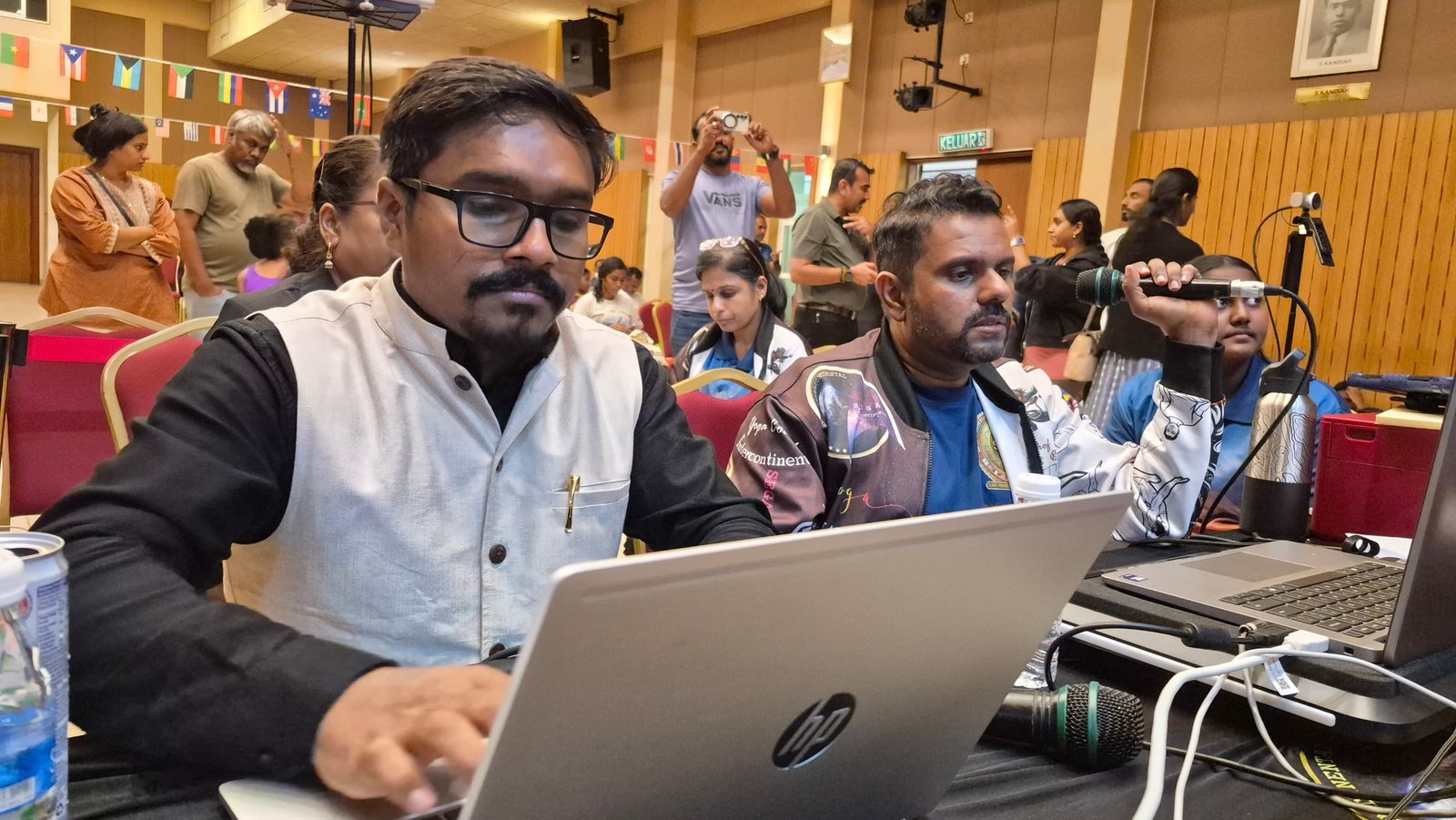
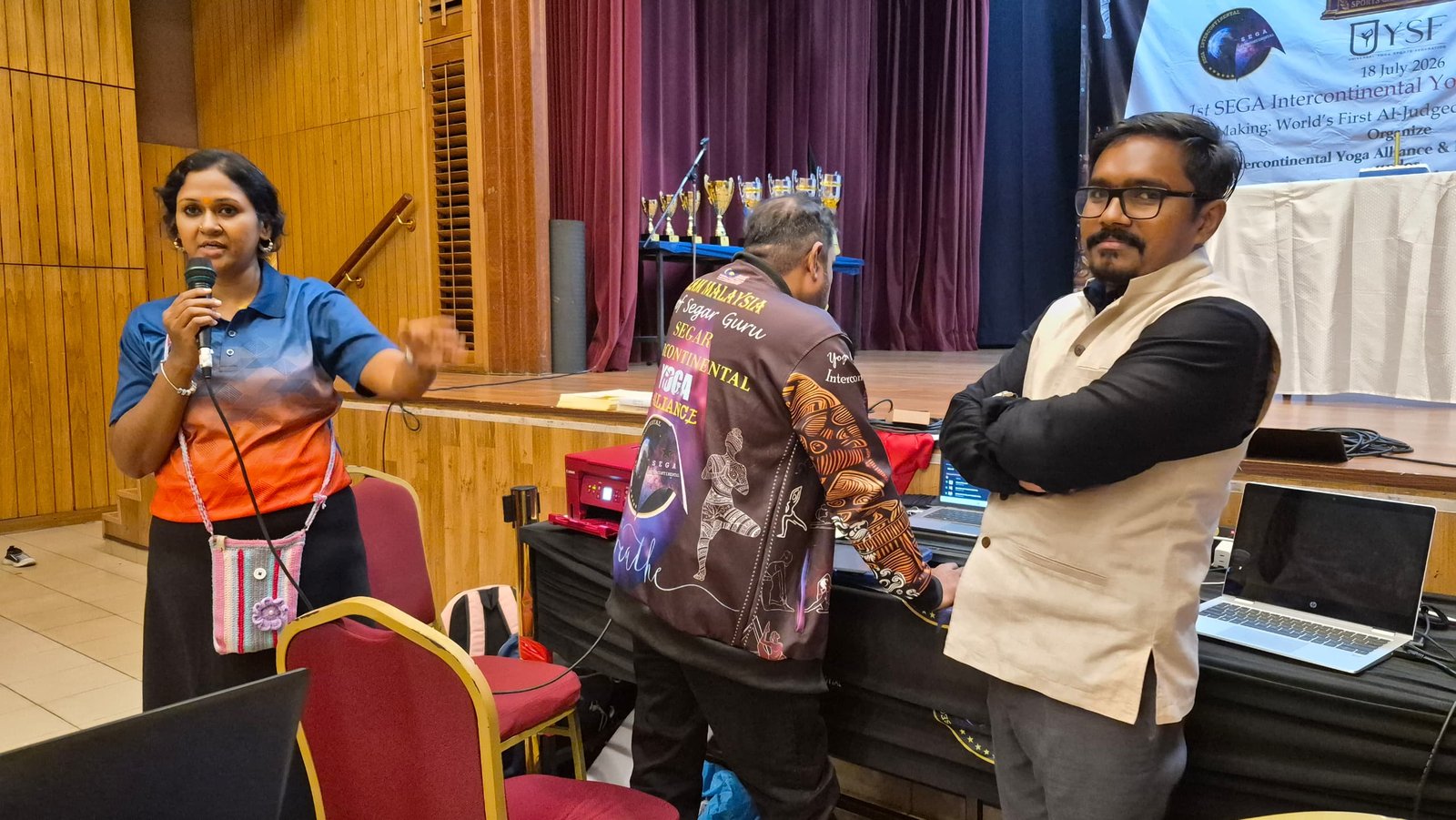
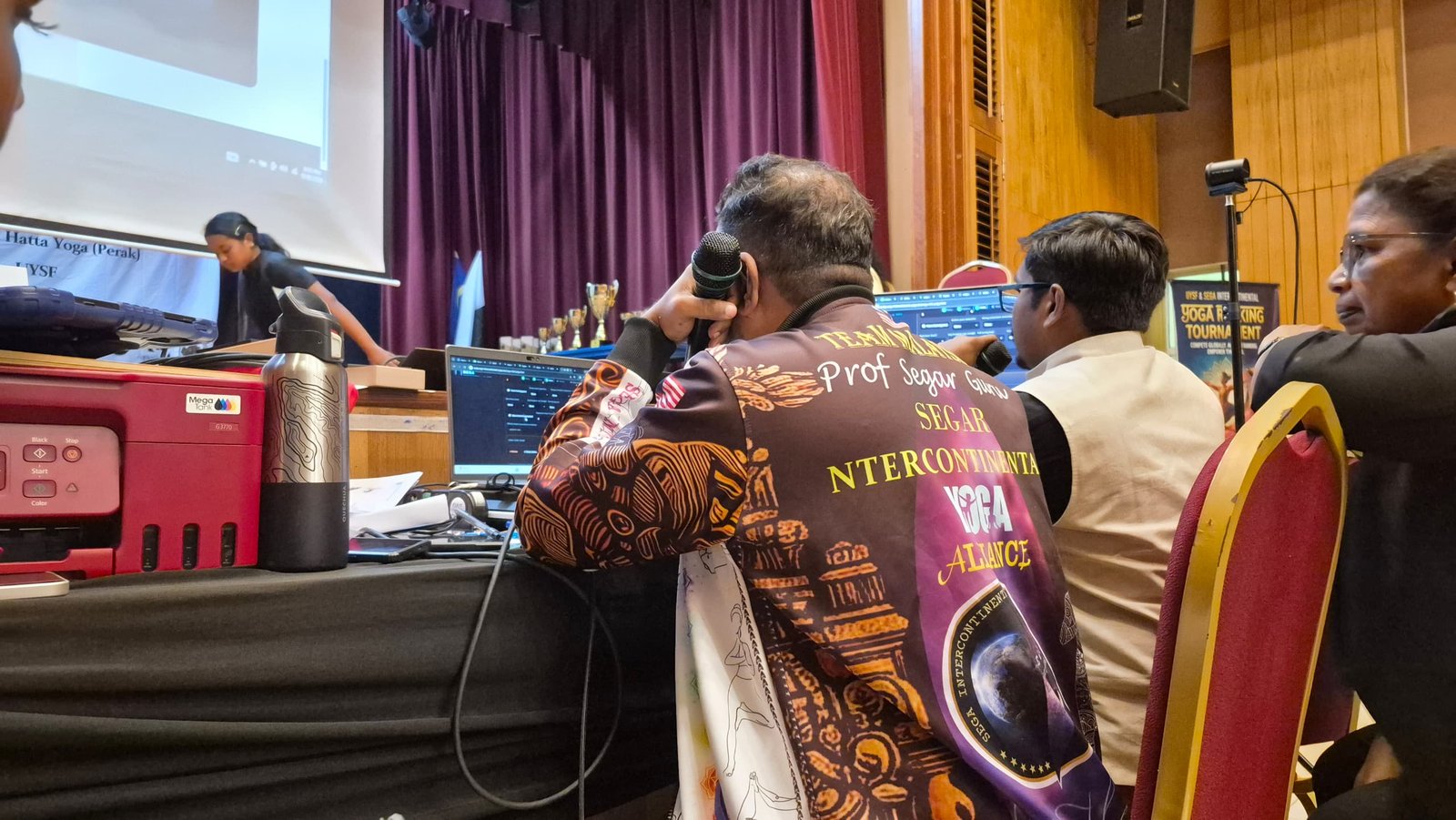
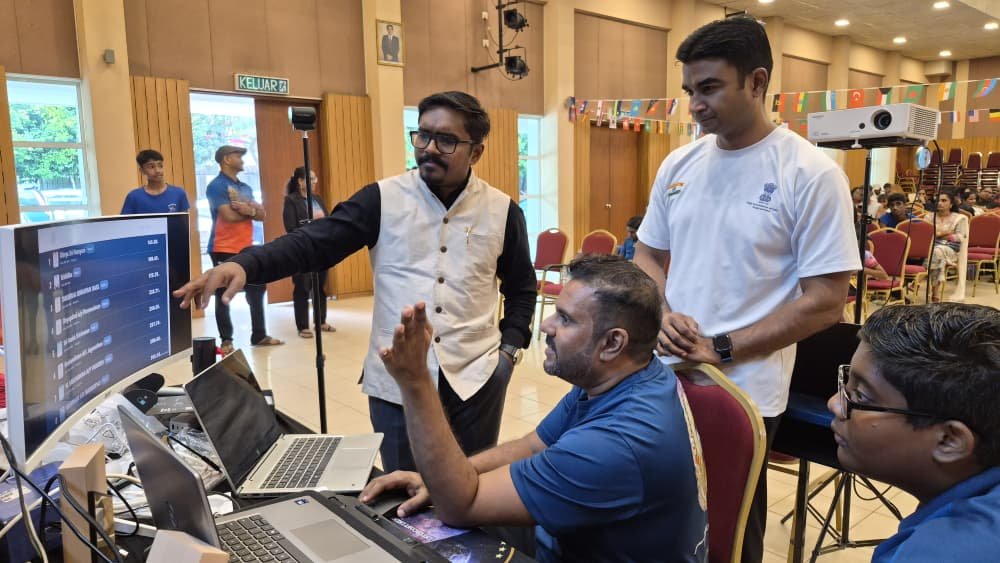
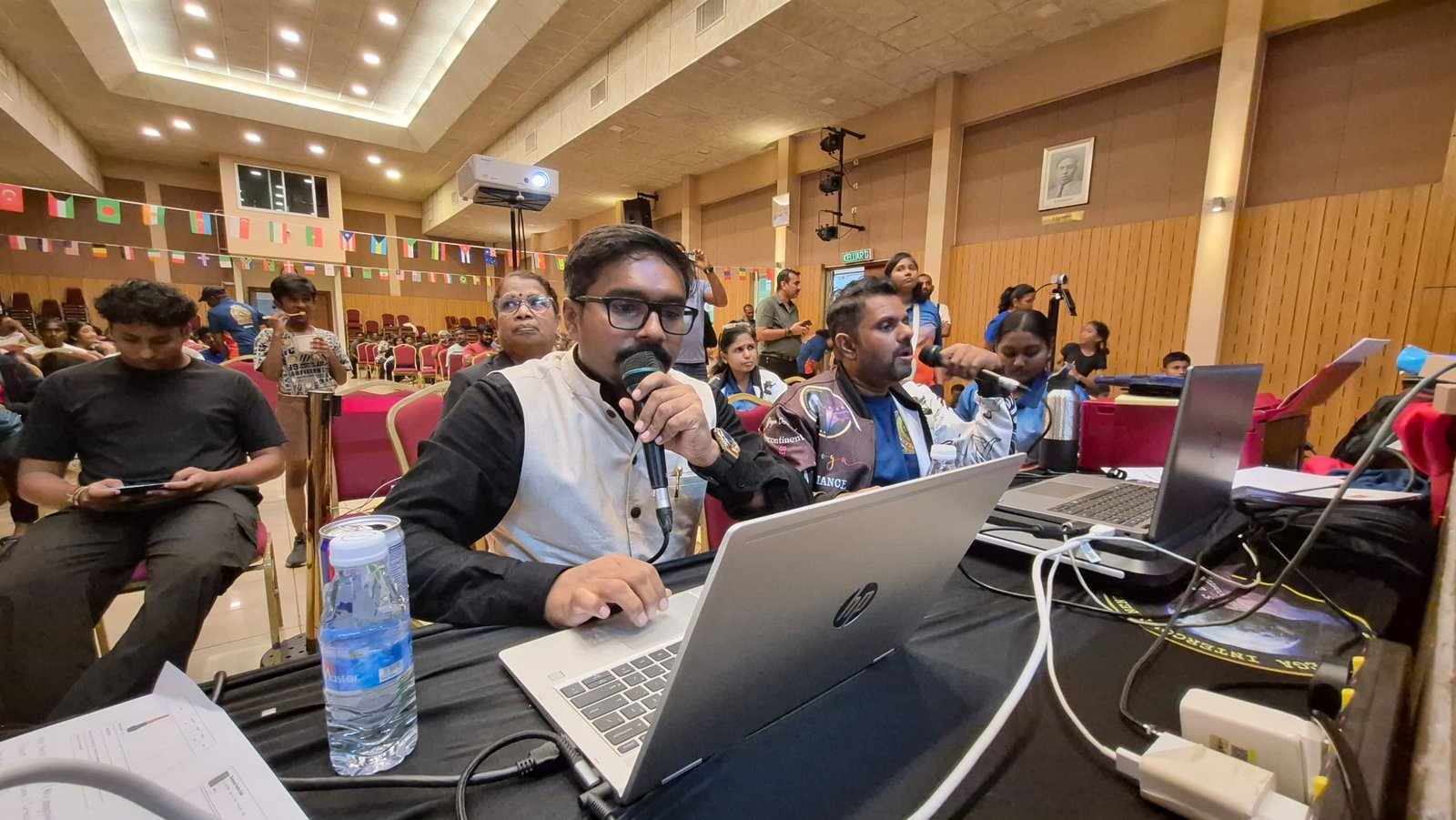
The system's debut was the UYSF & SEGA Intercontinental Ranking Championship, held 18–19 July 2026 at Kandiah Hall, Kuala Lumpur — to SEGA's knowledge the first international yoga tournament judged end-to-end by AI. 128 athletes competed across Yogasana, Chakra-thon and Acro Yoga. 113 medals were awarded. Every score is preserved in the tamper-evident archive and published to the athletes' pages linked from the rankings.
The Intercontinental AI (Live) phase remains live through the end of December 2026, with athletes from Malaysia, Singapore, India, Iran, China, Hong Kong, Oman, Sri Lanka and beyond submitting AI-judged performances online.
18. Deployment for federations and academies
Federations and yoga academies that wish to run their own sanctioned tournaments on the SEGA AI Judge System can license the platform through the SEGA Intercontinental Yoga Alliance. Deployment includes:
- Multi-camera capture rig calibrated for the venue
- Local inference server with reference syllabus for the divisions being run
- Certified Master Judge briefing and escalation protocol
- Integration into the SEGA World Ranking (subject to grade-tier review)
- Post-event audit report identical in format to the July 2026 championship report
The technical whitepaper is publicly available on request. The underlying source code and proprietary methods remain protected under trade secret.
Bring AI-judged precision to your championship
Federations and academies can deploy the SEGA AI Judge System. Every event it judges carries "Powered by the SEGA AI Judge System — developed by Master Segar."